
Water Heater Replacement in Tempe, AZ
Replace leaking, old or failing water heater with a reliable new one that best suits your home.
- Water heater replacement
- Water heater installation
- Water heater repair
- Tankless water heaters
- Gas water heaters
- Electric water heaters
Get Your Free Water Heater Quote
Tell us about your water heater needs and we will send you a quote with no obligation.
Water Heater Replacement in Tempe, AZ
Replacing a water heater is one of those projects most Tempe homeowners face once or twice — usually with little warning and not much time to research. Here's what actually matters.
When is it time to replace your water heater?
A storage tank generally lasts 8 to 12 years. Past that point, the question isn't whether it will need replacing but whether you'll choose the timing or the tank will. Watch for these:
- Age. The manufacture date is encoded in the serial number on the rating plate. Ten-plus years means it's time to plan.
- Frequent breakdowns. A third service call in two years on an aging unit is money spent propping up equipment near the end of its life.
- Leaks. A drip at a valve or fitting is often repairable. Water from the tank body is not.
- Rust and corrosion. Discolored hot water or rust creeping across the bottom seam means the tank's protective lining is failing.
- No hot water. On gas units this usually points to the pilot assembly or gas control; on electric units, a failed element or high-limit trip.
- Inconsistent temperature. Water that swings hot to lukewarm often means a drifting thermostat, sediment, or a tank that's simply too small for the household.
- Rising energy use. Sediment insulates the burner from the water, and newer units meet noticeably better efficiency standards than early-2010s models.
Choosing the right replacement
Tank vs. tankless. A storage tank keeps 40 to 75 gallons hot and ready — simplest swap, lowest upfront cost. A tankless water heater heats on demand, never runs out, and frees floor space, but usually needs new venting and often a larger gas line.
Gas vs. electric. If the home already has a gas water heater, staying with gas is normally the straightforward path. Electric units install almost anywhere since they need no flue, and heat pump models cut energy use substantially when the garage or utility area has room for them.
Sizing. Peak demand drives the decision, not household size alone. Two showers plus a dishwasher at 7 a.m. needs more first-hour delivery than four people who stagger usage. For tankless, sizing must account for local inlet-water temperature and simultaneous demand.
What to expect during the replacement
The installer confirms fuel, capacity and venting, shuts down and drains the old unit, removes it, sets and connects the new heater with a fresh relief valve and discharge line, checks draft on gas models, fills and purges the lines, then sets the temperature — commonly 120°F — and hauls the old tank away. Full detail: water heater replacement in Tempe.
Water Heater Services in Tempe, AZ
From a straight tank swap to an emergency leak, here's everything homeowners in the Tempe area can request help with.
Water Heater Installation
New and replacement tank, tankless, gas and electric systems sized for your property and installed with safe, code-conscious connections, proper venting, correct venting, expansion control and a full startup test before the crew leaves.
See water heater installation details →Water Heater Repair
No hot water, unusual noises, pilot-light failures and thermostat problems diagnosed methodically, with clear, practical guidance on when a straightforward repair makes sense and when replacement is the smarter long-term call.
See water heater repair details →Commercial Water Heater Installation
Commercial systems planned around peak demand, equipment access, redundancy and code requirements, then installed with staging and startup procedures that deliver reliable output, efficient operation and long-term serviceability for your business.
See commercial water heater installation details →Commercial Water Heater Repair
Commercial tanks, tankless banks, controls and recirculation systems tested systematically to isolate the real failure, complete the right repair and reduce operational downtime for restaurants, salons, gyms and multifamily properties.
See commercial water heater repair details →Tankless Water Heater
On-demand systems sized for simultaneous fixture use, installed with proper gas or electrical capacity, correct venting and isolation valves, plus ongoing descaling service to keep flow rates and efficiency high for years.
See tankless water heater details →Gas Water Heater
Natural-gas water heaters selected and serviced with careful attention to venting, gas-line capacity, combustion air and draft, so the unit fires reliably, heats efficiently and operates safely in your garage, closet or utility space.
See gas water heater details →Electric Water Heater
Standard electric and heat-pump models installed or repaired with proper element, breaker, wiring and condensate considerations, including load calculations and space planning so the new unit matches your home's electrical service.
See electric water heater details →Tank Water Heater
Conventional 40, 50, 65 and 75+ gallon storage systems matched to household demand, available space and recovery requirements, with honest sizing guidance so morning showers and evening laundry never run cold.
See tank water heater details →Emergency Water Heater Service
Prompt help for active leaks, flooding tanks and sudden hot-water loss, including immediate safety steps, damage limitation advice and a clear assessment of whether repair or replacement is the right next move.
See emergency water heater service details →Water Heater Maintenance
Preventive service including tank flushing, anode and valve checks, combustion inspection and condition-based recommendations that extend equipment life, hold efficiency and catch small problems before they become failures.
See water heater maintenance details →Water Heater Leak Repair
Pinpoint whether water is escaping from a fitting, valve, connection or the tank body itself, then get a straight answer on whether a targeted repair will hold or the unit has reached the end of its service life.
See water heater leak repair details →Water Heater Flush
Remove accumulated sediment and mineral deposits that cause rumbling noises, slow recovery and reduced efficiency, restoring heating performance and helping protect the tank bottom from premature wear and overheating.
See water heater flush details →Anode Rod Replacement
Inspect and replace the sacrificial anode before corrosion reaches the steel tank, a relatively inexpensive service that can add years of life to eligible systems when performed on a sensible schedule.
See anode rod replacement details →
Projects
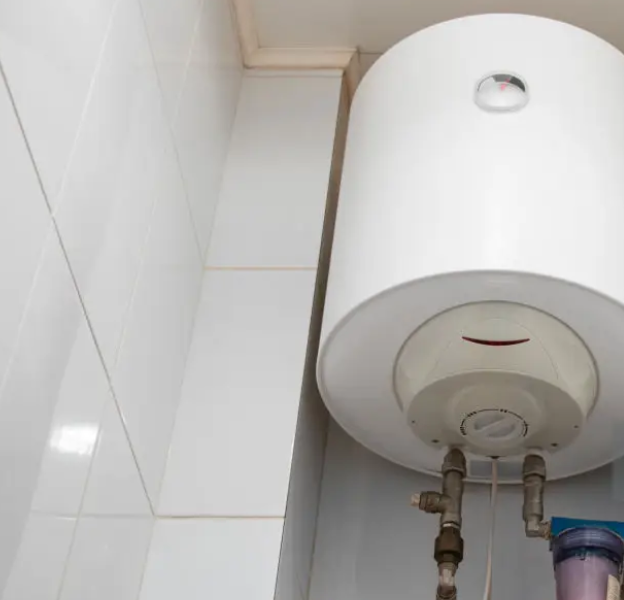
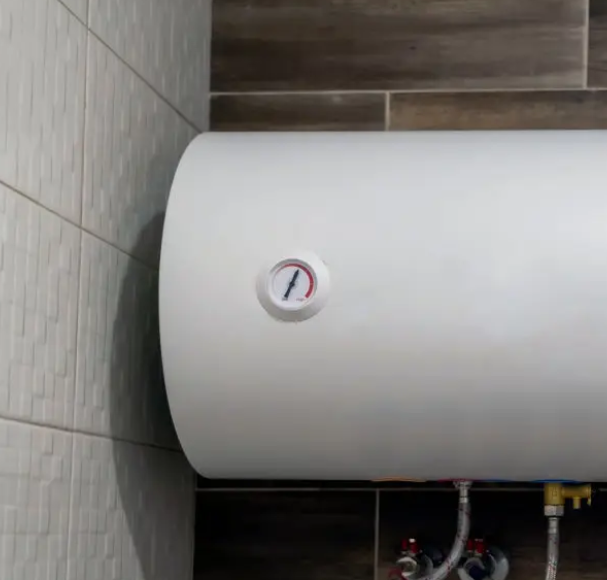
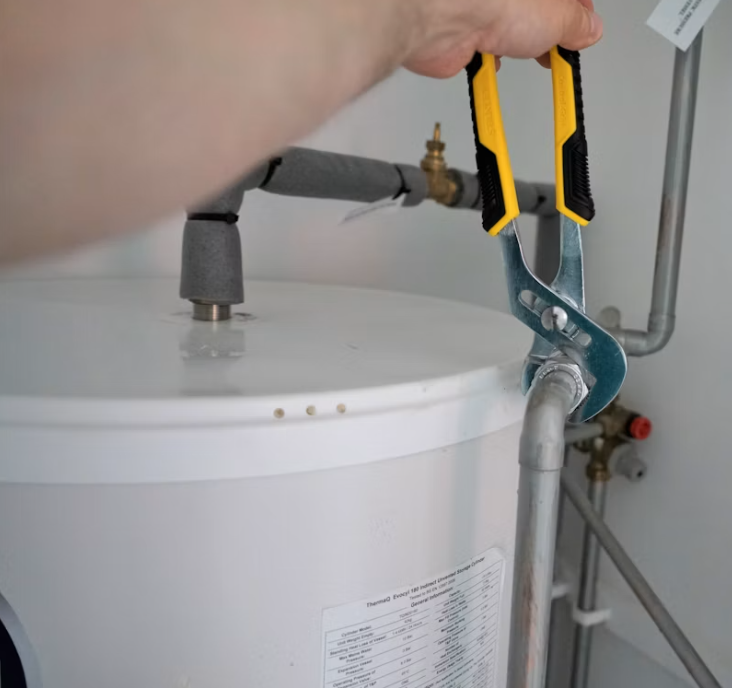
Preparing for Your Water Heater Replacement in Tempe
A little preparation before the crew arrives can shorten the replacement time, protect your floors and make the final installation safer. Clear a path from the driveway or street to the water heater location, move vehicles, stored items and laundry away from the work area, and make sure the main water, gas or electrical shutoffs are accessible. If the heater is inside a closet, attic or tight garage, removing nearby boxes, bikes or shelving gives the installers the room they need to haul out the old tank and set the new one.
Protect flooring and finished surfaces along the removal path with a drop cloth or old towels, especially if the existing unit is leaking or has sediment in the bottom. Plan for pets and young children to be kept in another part of the home during the swap, and identify any HOA rules or parking restrictions that could affect the service window. When you request a quote, we can walk through what to expect and what to have ready so your Tempe replacement goes smoothly from start to finish.
Tempe Water Heater Permits and Code
Water heater replacements and new installations in Tempe generally require a permit and inspection through City of Tempe Community Development. Arizona has no statewide plumbing code, so each city adopts and amends its own; Tempe works from the International Residential, Plumbing, Mechanical and Fuel Gas Codes together with the National Electrical Code, as amended locally. The exact scope depends on the property and project, so current requirements should always be confirmed with the city before work begins.
Common inspection items include a correctly routed temperature-and-pressure relief discharge line terminating where required, an accessible cold-water shutoff, proper venting and combustion air for gas equipment fed by Southwest Gas, electrical disconnect and circuit sizing for SRP- or APS-served electric units, a drain pan with a piped drain wherever leakage could damage the building, and thermal-expansion control where a pressure-reducing valve or check valve makes the system closed. Unlike Arizona, Arizona sits in a low-seismic zone, so earthquake strapping is not part of a Tempe inspection — but elevated street pressure across parts of the Valley makes expansion control and a tested relief valve genuinely important. A change in fuel, location or equipment type can add gas-line, vent, condensate or electrical work. See the full water heater installation process or request a quote so the site conditions can be reviewed.
Local Water Conditions and Water Heater Maintenance
Tempe's drinking water is treated Salt River and Colorado River (CAP) supply, and it is hard — commonly reported in the range of roughly 12 to 18 grains per gallon. That mineral load is the single biggest factor in water heater life across the East Valley. Calcium and magnesium drop out of solution fastest on the hottest surfaces, so it piles up on tank bottoms, cakes electric elements and coats tankless heat exchangers, producing popping and rumbling sounds, slow recovery, less usable hot water and recurring tankless error codes.
In Tempe, maintenance intervals should be set by the water, not by a generic calendar — hard-water homes here often need attention on a shorter cycle than manufacturer minimums suggest, and a whole-home softener changes the picture again. Storage systems benefit from periodic inspection, a working relief valve and condition-based tank flushing; older tanks may also benefit from an anode rod check. Tankless systems need accessible isolation valves and periodic descaling. Learn what is included in water heater maintenance.
Desert Heat, Hard Water and Hot-Water Demand
Tempe's desert climate works in a tankless system's favor: incoming water arrives far warmer than it does in northern markets — often in the 80s during a Valley summer — so the required temperature rise is small and rated flow is easier to reach. Winter inlet temperatures drop into the 60s, which is when undersized units start to show. Demand still depends on simultaneous use: early-morning showers before the heat sets in, laundry, dishwashing, large soaking tubs, casitas and guest suites frequently overlap.
Where the heater lives matters more here than in most markets. Tempe water heaters usually sit in an unconditioned garage, an exterior closet or a rooftop enclosure, where summer air routinely passes 110°F and pushes ambient-sensitive components, wiring and plastic drain lines hard. Heat-pump models actually benefit from that warm air, provided there is enough volume and a condensate path. Long slab pipe runs in South Tempe's larger single-story homes also add to the wait for hot water, so equipment should be sized from fixture flow and peak use — not bedroom count alone — with recirculation considered where distance, not capacity, is the real problem. Compare tank systems with tankless water heaters.
Tempe Neighborhoods and Service Area
Water heater needs vary widely across Tempe. Downtown and the Mill Avenue district, the ASU campus edge, Maple-Ash, Broadmor, Escalante and North Tempe near Tempe Town Lake are full of 1950s-70s homes with tight interior closets and original venting. South Tempe neighborhoods around Warner Ranch, The Lakes, Corona del Sol and the Elliot, Warner and Ray Road corridors lean toward larger single-story homes with garage installations and long runs to distant bathrooms. Student rentals, condos, townhomes and mixed-use buildings near Rural Road and Apache Boulevard add their own access, venting and capacity constraints. ZIP codes served include 85281, 85282, 85283, 85284, 85285, 85287 and 85288.
Service requests are also accepted across nearby East Valley communities, including Mesa, Chandler, Gilbert, Scottsdale, Guadalupe and Queen Creek. View all service areas near Tempe.
Water Heater Brands, Suppliers and Local Pricing Context
Commonly available water heater manufacturers across the Phoenix metro include Bradford White, Rheem, A. O. Smith, State, Rinnai, Noritz, Navien and Takagi. Availability varies by model: plumbing supply houses often carry professional product lines and parts, while home-improvement retailers carry a different mix. Brand matters less than correct sizing, local parts availability, warranty terms and an installation that follows the manufacturer's requirements.
Tempe pricing depends on more than the heater itself. Capacity, efficiency, fuel type, venting, gas-line or circuit changes, access, City of Tempe permit and inspection fees, drain-pan and thermal-expansion provisions, recirculation work, disposal and after-hours urgency during a July heat wave all affect a quote. A like-for-like tank replacement is usually simpler than a relocation or tankless conversion. For an accurate comparison, request the same scope and code upgrades from each provider rather than comparing equipment-only prices. Request a site-specific quote.
Tempe Housing Stock and Installation Access
Tempe is largely built out, which means a mix of mid-century ranch homes, 1970s and 80s tracts, ASU-area student rentals, condominiums, townhomes, large apartment communities, downtown infill and newer South Tempe custom homes. Existing heaters may sit in garages, narrow interior closets, exterior enclosures, attic platforms or shared mechanical rooms. The available footprint, door width, attic access, HOA rules and distance to a safe drain or vent termination point can all change the installation plan.
Older Tempe homes often need vent, shutoff, flex-connector, drain-pan or electrical updates when a unit is replaced, and slab-built houses need a plan for where pan water actually goes. Remodels and accessory dwelling units can also change demand enough to justify a larger tank, a higher first-hour rating, a gas system review or an efficient electric heat pump model. Multifamily and mixed-use properties may be better served by dedicated or redundant commercial water heater systems.
Tankless vs. Traditional Water Heaters
| Tank water heater | Tankless water heater | |
|---|---|---|
| Capacity | Finite — 40 to 75 gallons, then it needs to recover | Continuous, limited by flow rate rather than volume |
| Efficiency | Loses standby heat holding temperature all day | No standby loss; heats only while water flows |
| Installation | Simplest swap using existing connections | New venting, often a larger gas line, condensate drain |
| Maintenance | Annual flush and periodic anode checks | Annual descaling in mineral-rich water |
| Upfront cost | Lowest for whole-home hot water | Higher equipment and installation cost |
| Best for | Households the current setup already serves well | Homes that run out of hot water or need the floor space |
Compare in depth: tank water heaters and tankless water heaters.
Areas We Serve
Requests are matched with local water heater professionals across Tempe, the East Valley and nearby communities.
Mesa, AZ
Water heater replacement, installation and repair help for Mesa homeowners.
Chandler, AZ
Water heater replacement, installation and repair help for Chandler homeowners.
Gilbert, AZ
Water heater replacement, installation and repair help for Gilbert homeowners.
Scottsdale, AZ
Water heater replacement, installation and repair help for Scottsdale homeowners.
Guadalupe, AZ
Water heater replacement, installation and repair help for Guadalupe homeowners.
Queen Creek, AZ
Water heater replacement, installation and repair help for Queen Creek homeowners.
San Tan Valley, AZ
Water heater replacement, installation and repair help for San Tan Valley homeowners.
Apache Junction, AZ
Water heater replacement, installation and repair help for Apache Junction homeowners.
Gold Canyon, AZ
Water heater replacement, installation and repair help for Gold Canyon homeowners.
Fountain Hills, AZ
Water heater replacement, installation and repair help for Fountain Hills homeowners.
Ahwatukee, AZ
Water heater replacement, installation and repair help for Ahwatukee homeowners.
Common Water Heater Replacement Questions
How do I know it's time for a water heater replacement rather than a repair?
A storage tank that is past ten years old, leaking from the tank body, producing rusty hot water, or needing repeated service calls is usually better replaced than repaired. Frequent temperature swings, longer recovery times and a noticeable jump in your gas or electric bill also mean the unit is nearing the end of its useful life.
Should I replace my water heater with a tank or tankless model?
A traditional tank is usually the fastest, most budget-friendly replacement when the existing space, venting and fuel setup already work well. Tankless water heaters deliver endless hot water and free up floor space, but they often require venting upgrades, a larger gas line or electrical changes that add to the project scope.
How long does a water heater replacement take in Tempe?
A straightforward like-for-like tank swap can often be completed in a single visit within a few hours. Conversions to tankless, fuel changes, relocations or jobs that need a permit and inspection can extend the timeline to a full day or across two visits.
What should I expect to pay for a water heater replacement?
Pricing depends on the unit size and efficiency, fuel type, venting or electrical upgrades, code-required expansion control and drain-pan provisions, access conditions, disposal and permit fees. Because every home in Tempe is different, we provide a free, site-specific quote before any work is scheduled.
Is the replacement quote really free?
Yes. Submitting the form or calling in costs nothing, and the quote comes with no obligation to move forward. You receive a clear scope and price so you can compare options and decide on your own timeline.
Ready to Replace Your Water Heater?
Send a few details about your home and your current water heater. We will send you a quote with no obligation.
Get a Free Water Heater Quote